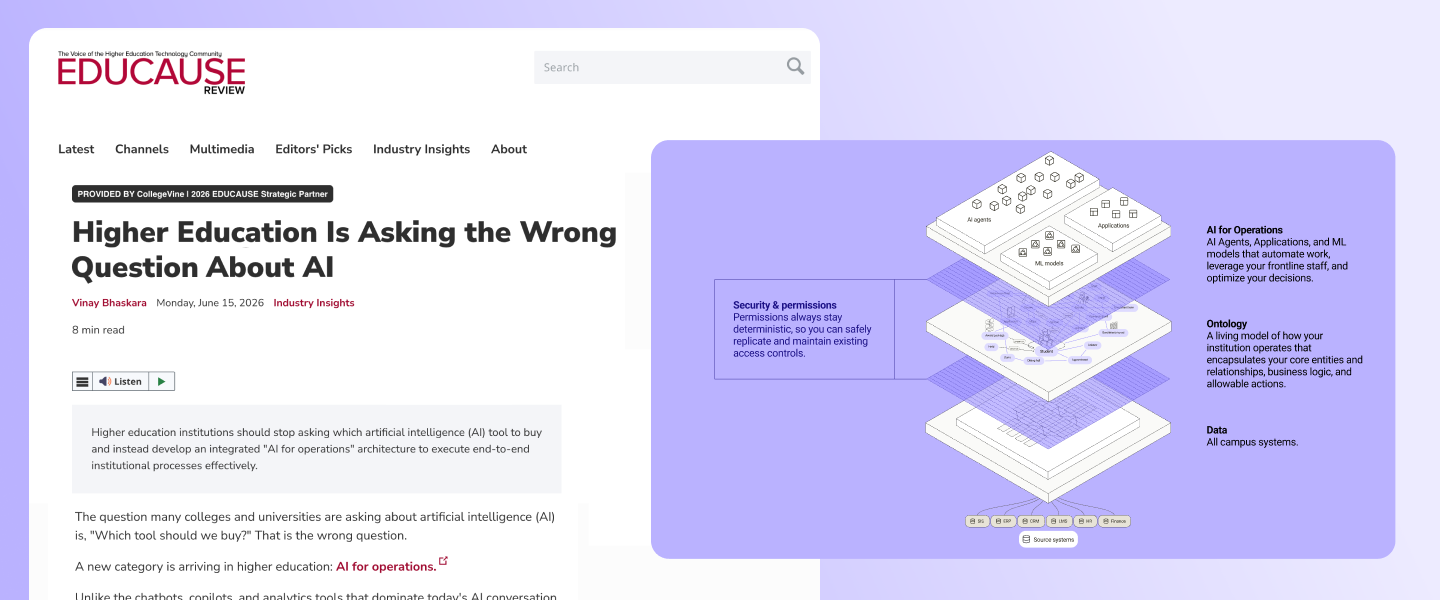
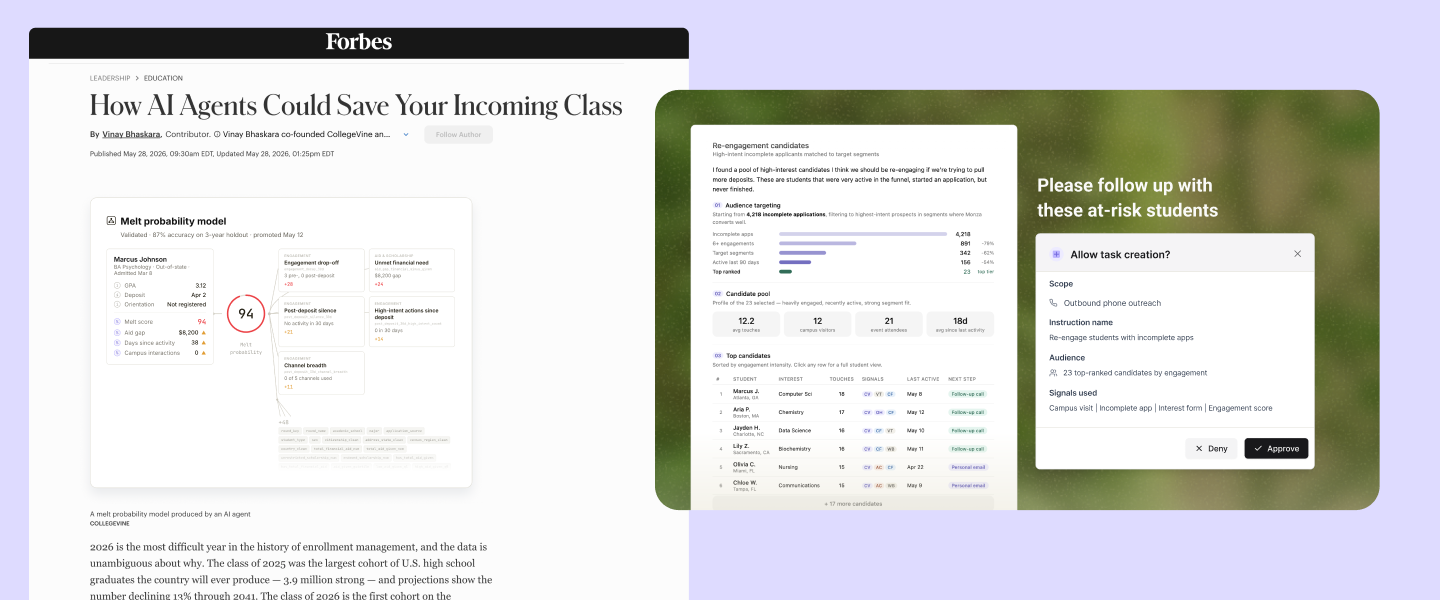
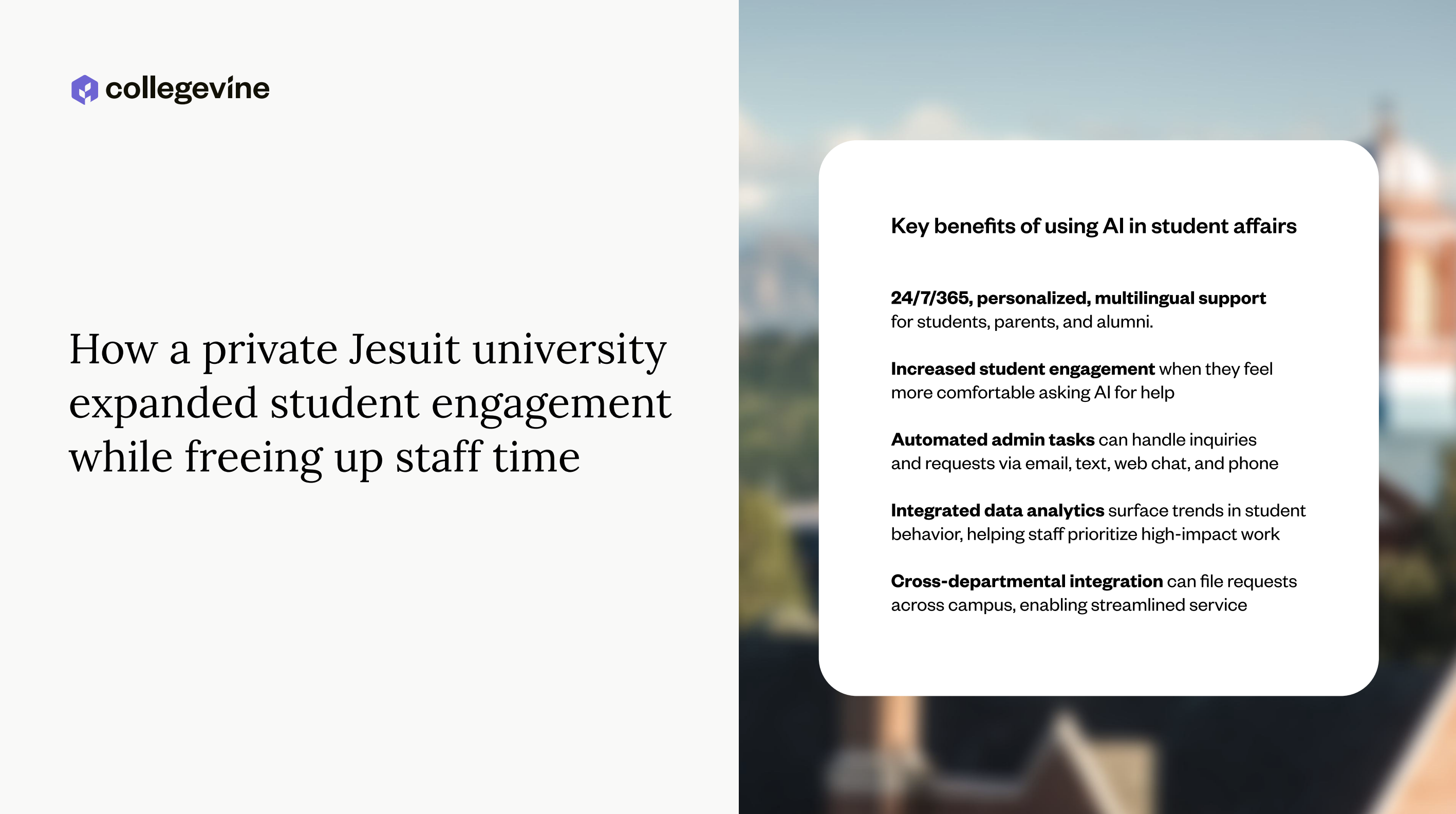
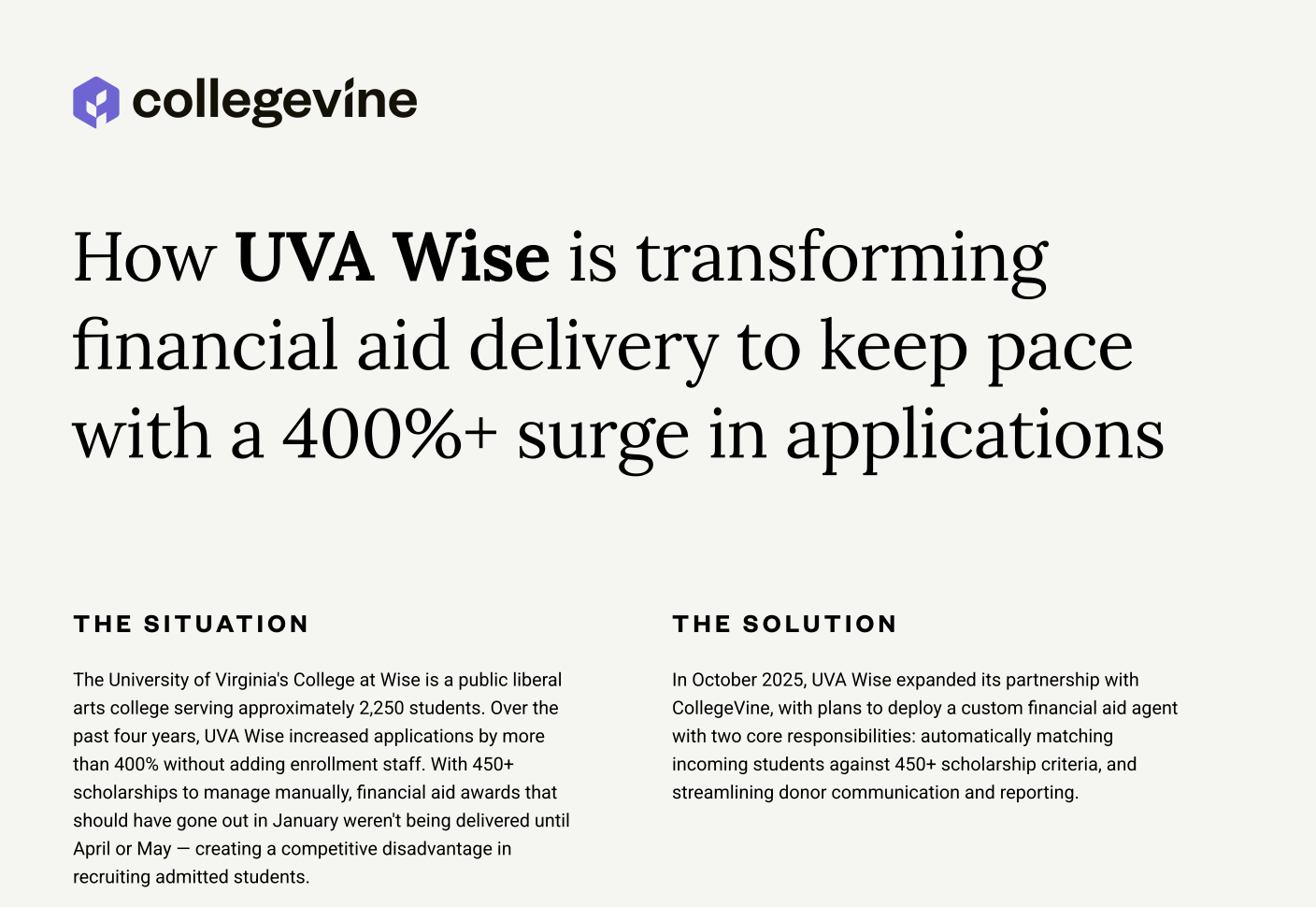
300 higher education leaders came to Vineyard to better understand how AI can work on their campuses. They wanted to learn from universities already using it, see where AI is making an impact, and leave with ideas they could bring back to campus.
Most higher ed institutions building an AI strategy didn't start with a top-down mandate. They started with one person attending events, comparing notes with peers at other schools, and bringing a specific recommendation back to leadership.
Why are leaders learning in public instead of waiting for a plan?
The technology is moving faster than most institutions' internal processes for evaluating it. One attendee put it plainly: "We don't really know what we're doing with AI, but we're really ready to rip the band-aid off and figure it out." That's why leaders are showing up to peer communities built for higher ed: to see "what other universities are doing, what kind of technologies are available, what possibilities we might be able to achieve in the future," as one attendee described it.
How far does that strategy need to reach?
Attendees didn't describe AI as a single tool for a single department. "Every facet of our university operations, we're looking to embed AI in some form or fashion," one said. Getting there usually means one person builds the case first: one attendee explained they came specifically to take information back to their president, "so that we can have AI across campus.鈥�











.png)
.png)


.png)